


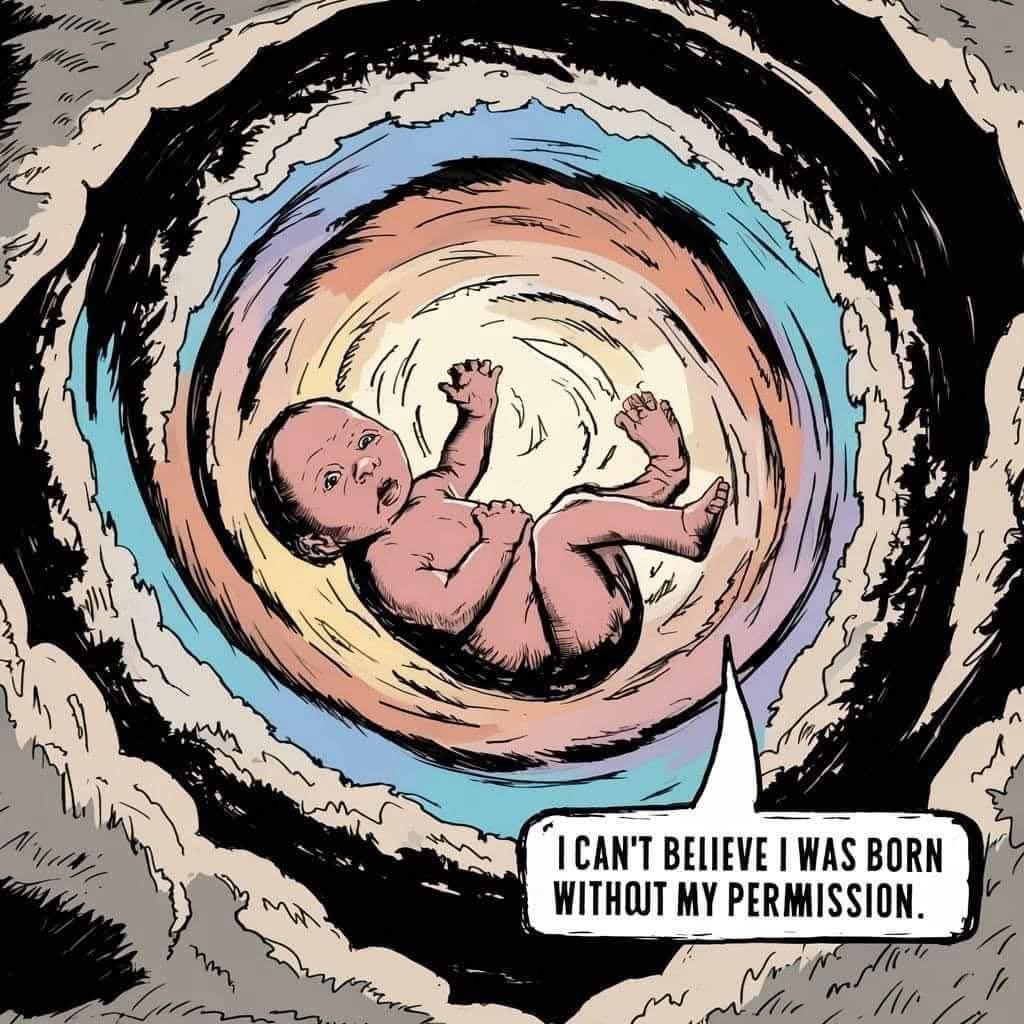
…La enfermedad y la salud son solo conceptos humanos; la naturaleza simplemente obra en unos cuerpos y en unas mentes de una forma u otra, llevando en sus caminos la vida por la muerte y la muerte por la vida sin realmente discernir entre ellas, porque estos también son conceptos. La naturaleza, en sus operaciones, no se pregunta si algo va bien o mal, si algo sobra o falta; no hay preocupación por lo que ocurre, sino ocupación impersonal, actividad. La salud o la enfermedad no existen objetivamente; son perspectivas del sujeto sobre los fenómenos, es decir, juicios de la percepción subjetiva, la de unos individuos (egos) que supuestamente existen como algo separado del proceso, valorando lo que ocurre a «ellos», esto es, tomando las condiciones o estados —físicos (dolor, placer, etc.) o afectivo-mentales (triste, alegre, etc.)— como «propios», involucrándose en lo que ocurre al cuerpo, o, a la mente, para «ayudarle» con cuidados (therapeía) a subsistir o mejorar. Si el cuerpo obedece a este «yo» de permanecer de cierta manera, se dice que está «sano»; hay equilibrio. Pero, si el cuerpo o la mente toma su propio camino, lejos de las expectativas de este «yo» y a sus expensas, se dice entonces que se ha perdido la salud o el alma, y se le trata para que vuelva a funcionar como «debe», negando la funcionalidad actual, pues el deterioro orgánico o mental es visto con pobres ojos, morales…
Opus contra naturam
[ENGLISH TRANSLATION]
…Illness and health are merely human concepts; nature simply works in bodies and minds in one way or another, leading life through death and death through life without truly discerning between them, because these are also concepts. Nature, in its operations, does not ask whether something is right or wrong, whether something is superfluous or lacking; there is no concern for what is happening, but rather an impersonal occupation, an activity. Health or illness do not exist objectively; they are the subject’s perspectives on phenomena, that is, judgments of subjective perception, that of individuals (egos) who supposedly exist as something separate from the process, evaluating what happens to «them,» that is, taking the conditions or states—physical (pain, pleasure, etc.) or affective-mental (sad, happy, etc.)—as «their own,» involving themselves in what happens to the body, or to the mind, to «help» it with care (therapy) to survive or improve. If the body obeys this «self» by remaining in a certain way, it is said to be «healthy»; there is balance. But if the body or mind takes its own path, far from the expectations of this «self» and at its expense, then it is said to have lost its health or soul, and it is treated to return to its proper functioning, denying its current functionality, since organic or mental deterioration is viewed with a poor, moral eye…
Pingback: online order androxal cheap sale
Pingback: enclomiphene Overnight COD no prescription
Pingback: buying rifaximin generic does it work
Pingback: order xifaxan no prescription mastercard
Pingback: how to order staxyn generic canadian
Pingback: avodart without doctor rx
Pingback: how to order dutasteride generic online uk
Pingback: get gabapentin price by pharmacy
Pingback: achat kamagra achat
Pingback: flexeril cyclobenzaprine shipped over night without a perscription